

Whilst most cases of bad breath in dogs and cats is caused by dental disease, bad breath can be a symptom of more severe health conditions such as Diabetes Mellitus, kidney failure or liver damage. At Family Vets, we recommend all owners book an appointment to have their pet checked if they have malodorous breath or any other signs associated with dental disease.
Quick Summary for Pet Owners
If your pet has dental disease, here’s what you need to know upfront:
- Bad breath, difficulty eating and drooling are common early signs
- Cats and small breed dogs are especially prone to dental disease
- Dental disease can spread bacteria to the heart, liver and kidneys if left untreated
- Daily tooth brushing is the single most effective thing you can do at home
- Professional veterinary treatment is the only way to remove tartar and restore a healthy mouth

How will I know if my pet has dental disease?
The main symptoms of dental disease in dogs and cats include:
- Bad breath (halitosis)
- Difficulty chewing hard foods or toys
- Reduced eating
- Excessive drooling
- Food falling from the mouth when eating
- Red line along the tooth/gum margin
- Exposed tooth roots with gum recession
- Bleeding from the mouth or onto chew toys
- Signs of pain or discomfort in the mouth
- Loss of teeth
- Swollen face, especially under the eye.
Cats and small breed dogs are particularly prone to dental disease. These breeds are also often “mouth shy” so owners cannot regularly check their teeth, especially the back ones. Hence, the extent of dental disease can go undetected for long periods of time.
What should a healthy mouth look like?
A healthy mouth in dogs and cats should not be persistently malodorous, should have pink gums to the tooth line, should have full length undamaged teeth and an absence of mineralised tartar.
What’s the difference between plaque and tartar?
Both plaque and tartar contribute to dental disease and breakdown of healthy oral tissue, but they are distinctly different substances.
Plaque is a biofilm which forms on teeth after eating and forms when oral bacteria, food debris and saliva combine. It is a soft, sticky substance readily removed with tooth brushing.
Tartar (or dental calculus) is a mineralised form of plaque that occurs if plaque is not removed regularly. Tartar strongly adheres to teeth and cannot be removed by brushing, requiring professional veterinary cleaning.

Please contact Family Vets on (02) 9622 1200 or book online to discuss your pet’s dental health and have a veterinary assessment.
Why should I be concerned about dental disease?
Dental disease is painful
Many animals do not show overt signs of pain until the dental disease is advanced despite the pain being present for extended periods of time; they mask/hide the discomfort from owners.
Dental disease damages the mouth
Dental disease in dogs and cats causes long term damage to teeth, gums and the bones of the jaw. Loss of teeth compromises your pet’s ability to eat, loose teeth cause pain and discomfort and gum loss exacerbates the potential for further tooth loss and pain.
Dental disease can cause bone infection
Teeth are embedded in the bones of the jaw and infection can spread from the mouth into these bones. Bone infection weakens bony structures and can result in further tooth loss and fracturing of the jaw. Bone infection requires long term antibiotic treatment to heal.
Dental disease can make your pet sick
Dental disease is not isolated to causing medical issues in the mouth. The bacteria involved in dental disease can become widespread throughout the body. When gums bleed, the bacteria gain entry to the bloodstream and can cause infection in other organs, notably the heart, liver and kidneys. Infection in these organs compromises function and can lead to multiple medical issues.
Dental disease is a serious condition, leading to significant health issues in affected animals. Prevention and early detection are essential for the long-term health of your pet.
How can I help prevent dental disease in my pet?
Owners can proactively prevent dental disease in their pet by implementing preventative measures such as:
- Daily tooth brushing with pet-safe toothpaste and finger toothbrushes or pet toothbrushes
- Using additives in drinking water for pets resisting daily brushing
- Providing dental chews
- Dental chew toys with small projections to clean teeth
- Use of prescription dental diets
- Use of dry food
- Regular veterinary dental checks
- Booking regular veterinary scale and polish treatments.

What does a professional veterinary dental procedure involve?
Any dental intervention performed on dogs or cats must be performed under general anaesthesia for the safety and welfare of the animal.
At Family Vets, we perform pre-anaesthetic blood screening to identify any areas of concern before giving anaesthetic agents to your pet. Intravenous fluids (“a drip”) are provided to all animals undergoing dental treatment.
Once anaesthetised, all teeth are individually assessed by the veterinarian and any issues identified. The teeth are graded according to a 4-tier system and an individualised plan made for treating the teeth.
Grade 1 requires a scale and polish only.
A scale and polish involves ultrasonic scaling of all teeth to remove any accumulated plaque and thin tartar if present. Manual scaling will occur under the gum line to ensure all plaque is removed. Once the teeth have been scaled (cleaned) on all sides, a polishing paste is used and high-speed polishing of each tooth then removes any micro-abrasions on the teeth to help reduce the attachment of plaque post-dental.
Grades 2-4 will require more extensive treatment as well as a scale and polish.
At Family Vets, we use digital dental radiography to assess teeth below the gumline to ensure the veterinarian is aware of any issues associated with the teeth deep within the jaw.
The thick cement-like tartar will be removed and the teeth examined. If any tooth roots are exposed, gum recession is noted or loose teeth are identified, tooth extraction will be needed. The surgical removal of teeth is a delicate process which may involve gums, bone and the affected tooth. Multi-rooted teeth will need to be split into individual root segments. Sutures will generally be placed and antibiotics are often given.
Animals undergoing a grade 2-4 dental procedure will be discharged from Family Vets with antibiotics and pain relief. Written discharge instructions will guide owners through the recovery period.

What does a veterinary dental procedure cost?
Given the complex nature of veterinary dental surgery, cost can be a factor of concern for owners. At Family Vets, we use veterinary dental bundles which provide cost effective dental treatments for pets.
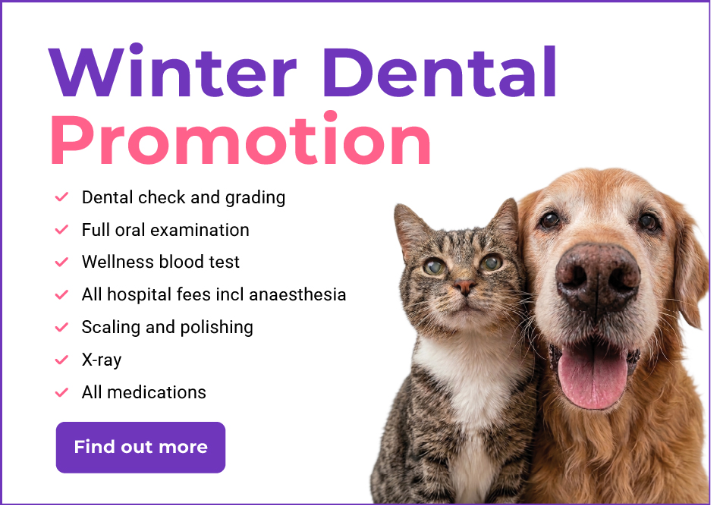
Our veterinary dental bundles include pre-anaesthetic blood screening, intravenous fluid therapy, all general anaesthetic costs and all dental treatment (including dental x-rays for grade 2-4) and medications (including take-home medications) as needed for the grade of dental disease your pet is being treated for. We also include a post dental recheck 5-7 days after the procedure to assess your pet’s healing.
The full extent of dental treatment needed cannot be fully assessed in the conscious animal. Once all tartar has been removed and the teeth fully assessed, the treatment required can be determined. For this reason, you will be given a range in your cost estimate which covers the grade of disease based on a visual inspection of your conscious pet and the next grade up in anticipation of the damage being more extensive as is often the case. Our veterinary dental bundles are price capped to assist owners with budgeting.
Dental disease is a serious and common medical condition seen in pet dogs and cats. Preventative measures can be implemented at home, but only professional veterinary dental treatment will remove tartar and restore the pet’s mouth to a healthy state once dental disease has taken hold. Maintaining a healthy mouth is a vital component of keeping your pet healthy due to the myriad of effects dental disease can have on other vital organ systems of the body.
Frequently Asked Questions About Desexing Pets
How many teeth do adult dogs and cats have?
Adult dogs have 42 teeth.
Adult cats have 30 teeth.
Will my pet be able to eat ok if it has teeth extracted?
It is ideal for pets to maintain a full mouth of healthy teeth throughout life. However, if loose, damaged or diseased teeth are present, it is best to have the affected teeth extracted.
Dogs and cats are remarkably capable of eating after teeth have been surgically removed. Immediately post dental surgery you will be given instructions on what is appropriate to feed your pet during recovery. Long term your pet will likely return to its pre-dental procedure diet unless a more appropriate diet is identified.
Will the dental surgery be covered by my pet insurance?
Pet insurance policies differ greatly.
We strongly recommend you contact your pet insurer directly prior to the procedure if you are not sure of your coverage for dental procedures. If you are insured with a Gap Only provider, we can send the estimate to them for a pre-approval estimate of your level of coverage. We suggest this be done at least a few days before the procedure, so you are aware of your contribution prior to procedure day.
Your pet’s dental health impacts their overall wellbeing
Whether your pet is due for a routine dental check or you’ve noticed signs of dental disease, the team at Family Vets is here to help. We’ll assess your pet’s mouth, explain what we find, and guide you through the most appropriate treatment options.
Book an appointment online or call us on (02) 9622 1200 to organise a dental health check for your pet.


.svg)
.svg)

